
"coffee plantations Madagascar"
192 article(s) found

Coffee in the world's major coffee producing areas common knowledge
1 South America [Colombia] is the world's second largest coffee producer, accounting for about 12% of the world's annual production, although far less than the first Brazil's 30% to 35%, but most of them are high-quality alpine washed beans. Central Colombia is divided into several valleys by three north-south vertical mountains, of which the central and eastern mountains are the main coffee producing areas. Coffee here.
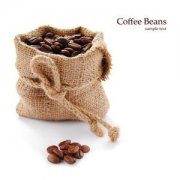
Analysis of producing countries of High-quality Coffee beans in Coffee Bean producing countries
1 South America [Colombia (Colombia)] is the second largest coffee producer in the world, accounting for about 12% of the world's annual output, which is much lower than that of Brazil, but most of them are high-quality mountain-washed beans. Central Colombia is divided into valleys by three north-south longitudinal mountains, of which the central and eastern mountains are the main coffee producing areas. Coffee here

The basic knowledge of coffee in the main producing areas of coffee all over the world
1 South America [Colombia (Colombia)] is the second largest coffee producer in the world, accounting for about 12% of the world's annual output, which is much lower than that of Brazil, but most of them are high-quality mountain-washed beans. Central Colombia is divided into valleys by three north-south longitudinal mountains, of which the central and eastern mountains are the main coffee producing areas. Coffee here

Coffee bean varieties: the historical cause and classification of cocoa bean varieties are explained in detail.
Morphological characteristics of the trunk: up to 12 meters high, trees, wide branches, branchlets brown pubescent. The trunk is solid and the cacao trunk has a luxuriant crown. Leaves: alternate, elliptic, leathery, 20-30 cm long, slightly stellate hairy on veins. Flowers: old cauline flowers, blooming directly on the trunk or main branch, about 1.8 cm in diameter; Calyx pink, smelly. 5 deep cracks; petals 5, lower sunken helmets
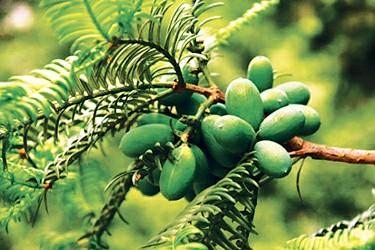
Coffee cultivation: what are the differences between different tree-shaped coffee beans in different producing areas?
There are four kinds of coffee trees in the world, of which only two are of real commercial value and are planted in large quantities. One is the Elaraby species (ARABICA), the other is the Robasta species (KOBUSTA). Different varieties of coffee beans have different flavors, but even the same varieties of coffee trees have their own unique flavors due to the influence of different soils and climates. Allah
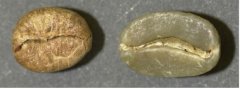
How to tell the robusta coffee beans? What does Luo Dou look like?
The first chapter of the Coffee Taste Collection, the basic knowledge of coffee beans, the first section, the three native species of coffee. 2. Robusta species (scientific name Coffee Robusta Linden). P8 (Note p8, which indicates page 8, is annotated in many places). Robusta coffee beans are generally used for instant solution because they extract twice as much coffee liquid as Arabica. Caffeine content 3
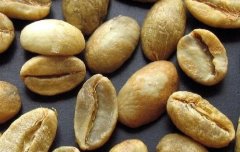
Introduction to Fine Coffee, basic knowledge, famous Coffee and Raw beans
Ethiopia (Ethiopia) Mocha Coffee Raw Bean Ethiopia mocha green bean Arabica Coffee is the hometown of Arabica Coffee, which grows at high latitudes and requires a lot of manual care. Here is the famous Ethiopian mocha, which has a sour taste similar to that of wine, fragrant and productive. Ethiopia also passes through its neighboring countries across the Red Sea.
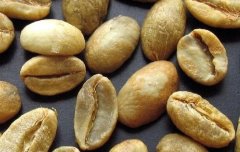
Introduction of high-quality and well-known coffee raw beans
Ethiopia (Ethiopia) Mocha Coffee Raw Bean Ethiopia mocha green bean Arabica Coffee is the hometown of Arabica Coffee, which grows at high latitudes and requires a lot of manual care. Here is the famous Ethiopian mocha, which has a sour taste similar to that of wine, fragrant and productive. Ethiopia also passes through its neighboring countries across the Red Sea.

A preliminary study on the Origin, Development, spread and Beverage Culture of Coffee
Coffee, tea and cocoa are the three major beverages in the world, which are consumed by about LM people all over the world, and their consumption is second only to drinking coffee in Europe and the United States. Coffee consumption is also becoming more and more popular in China and other eastern countries. However, in Chinese academic circles, there are no papers and monographs on coffee from the perspective of agricultural history and custom history.
Comprehensive knowledge of boutique coffee
Coffee distribution: coffee trees grow in the tropical or subtropical regions of the tropical or subtropical regions with the equator as the center and between the latitudes of 25 degrees south and north. At present, coffee is produced in more than 60 countries, widely distributed in South America, Central America, the West Indies, Asia, Africa, Arabia, the South Pacific and Oceania. In terms of output, Brazil, which accounts for the largest output in the world, is about

A brief introduction to the introduction to Coffee roasting, the complete Book of Coffee self-baking
When the author published the first edition of this book in 1996, roasting coffee beans at home was something that only tireless coffee addicts would do. At that time, roasting coffee beans was a very difficult thing to master, and roasters had to work hard to find a way to roast coffee beans to a moderate brown. Today, individuals still roast coffee beans at home.

The introduction to coffee roasting recommends the complete Book of Coffee self-baking.
When the author published the first edition of this book in 1996, roasting coffee beans at home was something that only tireless coffee addicts would do. At that time, roasting coffee beans was a very difficult thing to master, and roasters had to work hard to find a way to roast coffee beans to a moderate brown. Today, individuals still roast coffee beans at home.